
Reconstructing The Country
What Does This Mean?

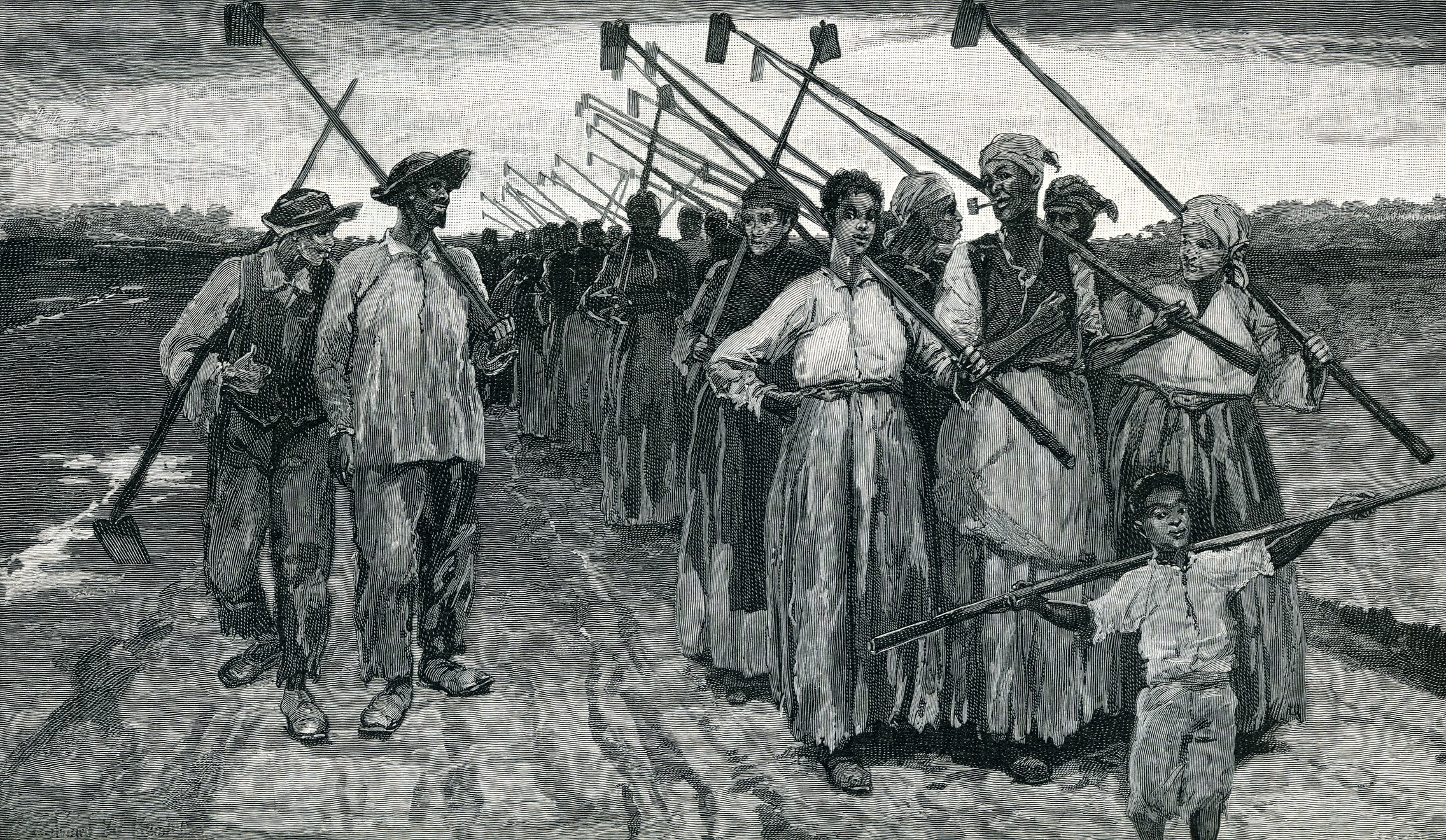
We’ve all heard of the Reconstruction era after the Civil War, right?
It offers a great perspective on what happens historically when a small group of wealthy white patriarchal men feel the need to reclaim their sense of superiority.
Their insecurities bring detriment to others, Black people in this case, but it is indicative of a repeated pattern throughout history. Anytime a group, regardless of gender, race, sexual orientation, or religion, is forced to bow down, stripped of rights, and made to fight for decades to reclaim them—while always living under the threat of losing them again—we’re witnessing the same oppressive dynamic.
Don’t believe me? Ask a minority whose skin is not white. Ask the Jews, who are perpetually scapegoated. And of course, ask women who refuse to live under the armpit of favoritism, falsely labeled as protection by those same men.
It’s always in the underbelly, and now it very clear.
So, let’s take a historical jaunt. That way, we know what to expect.
The Civil War
There were several causes leading to the Civil War.
To start there was a difference in economics, the North was more industrialized, the South relied more on agriculture. With their Southern plantations, land owners relied on slave labor.
There was also the two foundational questions posed in how to move forward as a country. The first was focused on did the United States want to remain a loose confederation of individual states, each with the ultimate power to govern themselves and even leave the Union if they chose?
Or did the country want to solidify into a single, unified nation? It would be held together by a strong federal government that had the authority to supersede states to maintain national integrity and enforce its laws across all states.
The second question focused on the United States identity based on the constitution. At the time it was a moral contradiction, as could a nation that proudly declared that “all men are created equal” continue to justify the existence of slavery? Would the United States with it’s ideals of liberty and human rights, remain the largest slaveholding nation in the world? In essence, denying freedom to millions of people based solely on race?
There were uncompromising differences between the North and South.
Lincoln’s Promise
Lincoln became President in 1860 with the promise to keep slavery out of the country, although he was not an abolitionist. The seven Southern states then seceded becoming the Confederate States of America. Unfortunately, for the confederacy—Lincoln and the Northern states did not see them as a sovereign nation. If they were to, they believed the United States could become a collection of battling countries at war with one another.
The war started at Fort Sumter in Charleston Bay on April 12, 1861, when the Confederates attacked the fort. At that point, four other slave states seceded to join the other seven.
In 1862, the real battle for the country began, with several skirmishes. And by 1864, the North changed its original goal of a limited war to restore the Union but then shifted to a new strategy: "total war." Their aim was to completely dismantle the Old South and slavery—at its foundation. To rebuild the Union with what President Lincoln called a “new birth of freedom” during his Gettysburg Address.
In 1863, the Emancipation Proclamation was issued by Lincoln, its message was that all slaves were free in the Southern states and could join the Union Army if they wished.
By spring 1865, all the main Confederate armies had surrendered under General Ulysses S. Grant. When Union cavalry captured the fleeing Confederate President Jefferson Davis in Georgia on May 10, resistance crumbled and the war officially ended. The long and difficult task of rebuilding a united, slavery-free nation had begun.
Even though the South lost the war, nothing changed in how they viewed the world, especially how they viewed people, specifically Black people.
Reconstruction
Reintegrating all the Southern states into a single Union was the main focus of Reconstruction, as was adding the 13th, 14th, and 15th Amendments to the Constitution. It also serves as a great reminder that women of all races were still not mentioned in the Constitution or given voting rights at that time, which the suffragettes actively challenged in their own fight for equality.
During Reconstruction, it seemed the equality gained for Black men was leveling the playing field.
This was the first time in U.S. history that Black men were able to vote and hold political office. Some were even elected to Congress, such as Hiram Revels of Mississippi—a former minister and teacher—who became the first Black man to serve in the U.S. Senate, appointed in 1870. Others soon followed, contributing to the passage of the Civil Rights Act of 1875.
Much of this progress in extending rights was made possible by the presence of Northern troops in the South.
The Civil War, the Constitutional Amendments and new freedoms for Black people changed very little in the thinking of those who had owned slaves or still maintained prejudices. As witnessed by segregation in the South.
Pinckney Benton Stewart Pinchback, a Black man, served as acting Governor of Louisiana for 35 days in 1871, following the impeachment of the former governor.
He remained active in politics for many years, working alongside other men of color, helping with the legal challenge to segregation in the public transport system in Louisiana. This case went all the way to the Supreme Court [Plessy v. Ferguson], which unfortunately led to the Jim Crow laws and segregation in public facilities for over 50 years. With discrimination increasing, he and his family relocated to Washington, D.C., in 1892.
One positive development during this time period, despite white landowners trying to curb the rights of free Black people, was that they could legally marry each other. This also allowed them to have their own households, and maintain family units. Another meaningful extension of this time period was their withdrawing from white churches and forming their own religious organizations.
The End of Reconstruction in 1877
The KKK was alive and well during this time, proof that hate never rests. In a patriarchal system run by wealthy white men, the threat of equality with a Black man was simply too much for many to bear.
Imagine stepping out of your front door each day, knowing that someone hates you on sight because of the color of your skin. Throughout history, there have been brief moments when Black people were treated equally by some—but never by all.
During Reconstruction, there was at least some federal control over racism and violence in the South. But by the end of the era, those working to strip away Black rights had succeeded. Power shifted into the hands of the so-called Redeemer governments.
Who were the Redeemers? White landowners who had benefited from the old pre-Civil War order in the South.
These governments, composed of white Southern Democrats, replaced Republican administrations in the South as the North began to lose interest in Reconstruction after the Civil War. Their goal was clear: to restore white supremacy and roll back the civil rights progress made during Reconstruction for Black folks and the poor.
The "Solid South" or Southern Democrats continued with all 11 former Confederate states to keep their thumb on Black Americans. This governance in the South continued until it gradually started to fall apart after WWII.
Jim Crow
As Redeemers gained control of Southern state governments they implemented segregation laws called Jim Crow.
Black individuals voting in the South declined as Redeemers and Populists clashed. While leaders like Tom Watson saw shared interests between poor whites and Blacks, most small white farmers resented Black voters for supporting conservative administrations.
From 1890 to 1908, Southern states systematically disenfranchised Black citizens through new laws. Though the Constitution banned racial discrimination, states used literacy tests that were selectively enforced—ignored for white voters but strictly applied to Black ones. Some states like Louisiana had the grandfather clause which meant if you could vote before 1867, you could vote now, and not have to be literate. Other states created other barriers to their voting access and ability.
Social order was also affected by these laws through subordination and segregation. Between 1889 to 1899, there were 187.5 lynchings per year in the South. For Blacks, the “separate but equal” doctrine meant public institutions were inferior from schools to housing to employment. This resulted in Black children finding they had limited opportunities, especially in comparison to White children.
What Did We Learn?
Not a lot.
History has shown us, time and again, that standing up for rights once is rarely enough. The fight for equality is a constant, ongoing issue.
The patriarchal system is still very much alive, and operating, as we can see with the current state of affairs. The operation of this system is reliant on holding down minorities, including women. And in times like the past 50 or so years, when more minorities and women have become educated and empowered, the system feels threatened. Their miserable method of oppressing others starts to crack and threaten their insecurities that pave their desolate way
Their messaging to other men (not in the club) is that something is being taken from them. In response, they need to oppress, either by denying rights or convincing other gullible men that they are not the enemy, but that everyone else is.
This tactic helps them build the army they need to keep the system intact. It’s the same pattern we saw after Reconstruction, during Jim Crow, and now again today in new forms.
Clearly, racism and prejudice are always at the base of the small patriarchal club. And when threatened by others rising to equality, it will always fight to push down rather than raise up!
What Can You Do?
History: It tells a story, that most aren’t taught in school. It repeats itself. Share it. Talk about it. Point it out. Call out the lies.
Share Truth: When you hear someone repeating racist or prejudiced statements—whether they realize it or not, don’t let it slide. You don’t need to admonish them, but you do need to speak up. Start by asking what they think it means, and if they don’t understand, explain it. If they do understand, then silence is not an option. That’s how prejudice stays alive.
Support candidates and policies: That are focused on dismantling systems of inequality—not just performing for what lobbyists want. Pay attention to voting laws, especially at the state level and run for office!
Get behind organizations: Led by Black people, women, and other marginalized voices. Money, time, energy—see what they need, support doesn’t always look the same, but it always counts.
Listen to your internalized conditioning: No one escapes the influence of systemic messaging—stories you’ve heard since childhood, assumptions you’ve made. Even those who mean well can find there is some narrow (or wrong) perspective about others. We are all people, no one is an object. Self-reflection is necessary, if we’re serious about change.
Let’s stop tragedy before we get there: It means to care all the time. Be consistent. Be awake. Be inconvenient when necessary.
History shows us what happens when people stop paying attention, let’s do what we can as a unified force for equality for everyone. It costs nothing, as there is enough for everyone.